Why Supplier Evaluation Matters More Than Price
The cheapest supplier rarely delivers the best value. Horror stories abound: shipments delayed by months, certificates that don't pass customs scrutiny, products that fail testing, or formulations that don't match specifications. One bad supplier experience can cost you customers, credibility, and capital.
Smart buyers evaluate suppliers the same way they'd evaluate any critical business partner—systematically, skeptically, and with documentation to back every claim.
The Red Flags That Should Stop You Immediately
Before we get to the checklist, here are automatic disqualifiers:
🚩 Can't provide GMP certificate from recognized certifying body
🚩 Refuses to share Certificate of Analysis or lab reports
🚩 Vague about ingredient sourcing ("we get the best quality")
🚩 No physical address or facility you can verify
🚩 Payment terms that feel risky (100% upfront, no recourse)
🚩 Can't provide references from current buyers in your market
🚩 Makes health claims that are legally problematic
🚩 Promises impossibly fast timelines (custom formula in 2 weeks)
If you spot any of these, move on. There are reputable suppliers who won't trigger these red flags.
THE SUPPLIER EVALUATION CHECKLIST
SECTION 1: Certifications & Compliance (Non-Negotiable)
✓ GMP Certification
What to verify:
- Certificate from recognized body (WHO-GMP, ISO 22000, or country-specific)
- Current and not expired (check dates)
- Covers the facility where YOUR products will be made
- Scope includes product categories you're ordering
Questions to ask:
- Can I see your current GMP certificate?
- When was your last audit?
- Which certifying body issued it?
- Can I speak with the auditor or certification body?
Why it matters:
GMP certification means consistent quality controls, documented procedures, and traceable batch records. Without it, you're gambling on every order.
✓ Laboratory Testing Capabilities
What to verify:
- In-house or third-party lab (both acceptable, third-party preferred for some tests)
- Accreditation status (ISO 17025 is gold standard)
- Range of tests performed (microbial, heavy metals, pesticides, potency)
Questions to ask:
- Where do you conduct quality testing?
- Can you share recent Certificate of Analysis examples?
- What's your testing protocol for each product?
- How do you handle failed batches?
Documentation to request:
- Sample CoA from recent production runs
- List of parameters tested
- Lab accreditation certificates
Why it matters:
Your brand reputation depends on product safety. Testing isn't optional—it's how you protect customers and avoid recalls.
✓ Regulatory Knowledge for Your Market
What to verify:
- Experience shipping to your specific country
- Understanding of your market's regulations
- Ability to provide market-appropriate documentation
Questions to ask:
- Have you supplied products to [your country] before?
- Can you help with regulatory compliance documentation?
- What label claims are permissible for my market?
- Do you understand [FDA/EU/TGA/etc.] requirements?
Red flag:
Supplier promises your product can "cure" diseases or makes claims that would be illegal in your jurisdiction. This shows they don't understand compliance—and that ignorance will become your problem.
SECTION 2: Manufacturing Capabilities (Capacity & Consistency)
✓ Production Capacity
What to verify:
- Facility size and equipment
- Current production volume
- Available capacity for your orders
- Scalability as your business grows
Questions to ask:
- What's your current monthly production volume?
- What's your minimum order quantity and why?
- Can you scale if my orders increase 3x?
- How many other brands do you supply?
- What's your typical lead time for reorders?
Why it matters:
Suppliers stretched beyond capacity deliver late, cut corners, or prioritize bigger clients. Ensure they have room to grow with you.
✓ Batch Consistency & Quality Control
What to verify:
- Documented SOPs (Standard Operating Procedures)
- Batch-to-batch testing protocols
- Quality control checkpoints
- Traceability systems
Questions to ask:
- How do you ensure consistency between batches?
- Can you show batch records from past production?
- What happens if a batch doesn't meet specs?
- How do you trace ingredients from source to finished product?
Documentation to request:
- Sample batch production record
- Quality control checklist
- Non-conformance report (how they handle failures)
✓ Ingredient Sourcing & Transparency
What to verify:
- Origin of herbs and ingredients
- Organic/sustainable sourcing claims
- Supplier relationships (direct or middlemen)
- Storage and handling protocols
Questions to ask:
- Where do you source [specific herb]?
- Are ingredients organic certified? Can I see certificates?
- Do you work directly with farmers or through distributors?
- How do you verify ingredient authenticity?
- What's your policy on adulterated ingredients?
Why it matters:
Ayurvedic herbs are frequently adulterated or mislabeled. A supplier who can't name their sources is likely buying from middlemen who don't guarantee quality.
SECTION 3: Communication & Reliability (Partnership Readiness)
✓ Responsiveness & Clarity
What to observe:
- Response time to inquiries (24-48 hours is reasonable)
- Clarity of communication (no vague answers)
- Willingness to provide detailed information
- Proactive updates vs. waiting to be asked
Questions to gauge:
- How quickly do they answer technical questions?
- Do they provide specific answers or generic assurances?
- Do they understand your business needs or just push products?
- Are they defensive when you ask hard questions?
Red flag:
Slow responses during sales phase = even slower during fulfillment. If they're evasive now, they'll ghost you when problems arise.
✓ References & Track Record
What to verify:
- Existing clients you can contact
- Years in business (5+ years preferred)
- Experience with brands like yours
- Online reviews or reputation
Questions to ask:
- Can you provide references from current customers?
- Have you worked with brands in [your market] before?
- May I speak with a customer who imports to my country?
- Can you share case studies or success stories?
Due diligence steps:
- Google the company name + "review" or "complaint"
- Check business registration (verify they're legally established)
- Ask references about: quality, timeliness, problem resolution, communication
✓ Problem Resolution & Support
What to verify:
- How they handle complaints
- Quality guarantee or refund policies
- Support after the sale
- Willingness to work through issues
Questions to ask:
- What happens if a shipment is delayed?
- What's your policy if product doesn't meet my market's standards?
- How do you handle customer complaints about your products?
- Can you share an example of how you resolved a problem?
Why it matters:
Problems will happen. What separates great suppliers from mediocre ones is how they handle things when they go wrong.
SECTION 4: Commercial Terms (Protecting Your Investment)
✓ Pricing & Payment Terms
What to verify:
- Price breakdown (product + shipping + documentation)
- Payment structure (deposit + balance is standard)
- Currency and conversion handling
- Hidden fees or surprise costs
Questions to ask:
- What's included in your quoted price?
- What payment terms do you offer?
- Are there additional fees I should expect?
- How do you handle currency fluctuations?
Reasonable payment structure:
- 30-50% deposit upon order confirmation
- 50-70% balance before shipment
- Letter of Credit for large orders (if needed)
Red flag:
100% payment upfront with no recourse. This leaves you vulnerable if they don't deliver.
✓ Contract & Legal Protection
What to verify:
- Written agreement covering all terms
- Intellectual property clauses (if custom formulation)
- Liability and quality guarantees
- Dispute resolution mechanisms
Questions to ask:
- Can we formalize our agreement in writing?
- Who owns the formula if we develop custom products?
- What happens if product fails quality testing?
- How are disputes resolved?
Essential contract elements:
- Product specifications
- Quality standards
- Delivery timelines
- Payment terms
- Quality guarantees
- IP ownership (for custom formulas)
- Termination clauses
SECTION 5: Export & Logistics Expertise
✓ Documentation & Compliance Support
What to verify:
- Experience with export documentation
- Understanding of customs requirements
- Ability to provide all necessary certificates
Questions to ask:
- What documents do you provide for customs clearance?
- Have you shipped to my country before?
- Can you handle certificate attestation/legalization?
- Do you work with freight forwarders or should I arrange?
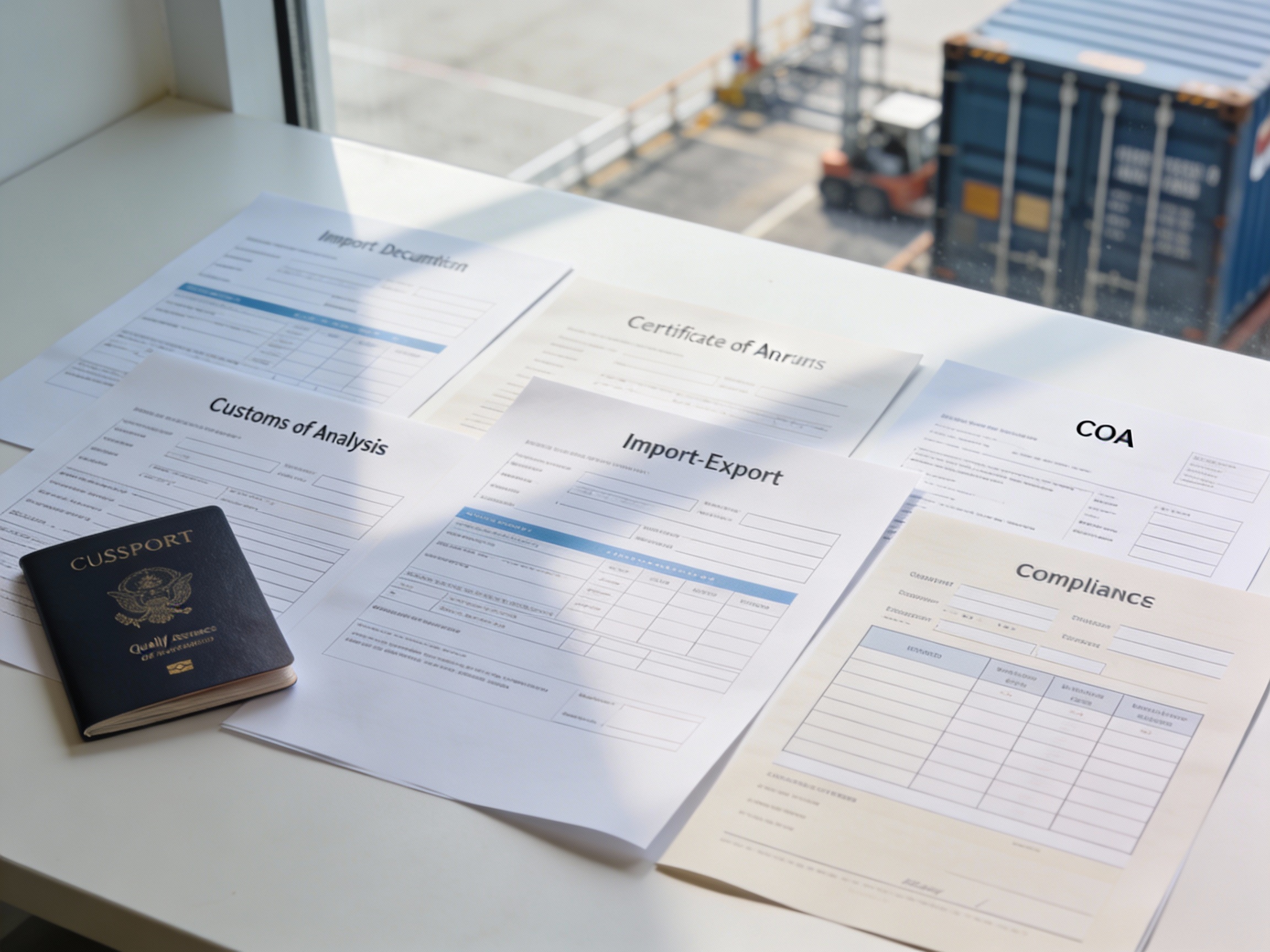
Standard documents they should provide:
- Commercial Invoice
- Packing List
- Certificate of Origin
- Phytosanitary Certificate (if required)
- GMP Certificate
- Certificate of Analysis
- Material Safety Data Sheet (if applicable)
✓ Shipping & Delivery Reliability
What to verify:
- Shipping methods available
- Typical delivery timelines
- Insurance and risk management
- Tracking and updates
Questions to ask:
- What shipping options do you offer?
- What's the typical timeline from order to delivery?
- Is shipping insurance included?
- How do you handle damaged or lost shipments?
- Will I receive tracking information?
THE EVALUATION MEETING CHECKLIST
When you're ready to schedule a call or meeting with a potential supplier, use this checklist:
Before the Meeting:
☐ Review their website and any available documentation
☐ Prepare your list of questions
☐ Know your requirements (quantities, timeline, budget)
☐ Have a list of your non-negotiables
During the Meeting:
☐ Note their response time and clarity
☐ Ask about their process, not just products
☐ Request specific examples and documentation
☐ Discuss what happens when problems arise
☐ Gauge their understanding of your market
After the Meeting:
☐ Request sample products if available
☐ Follow up on any documentation promises
☐ Check references they provided
☐ Compare multiple suppliers before deciding
☐ Get everything discussed in writing
Sample Request for Proposal (RFP) Template
Use this when reaching out to multiple suppliers:
Subject: RFP for [Product Type] Supply - [Your Company Name]
Dear [Supplier Name],
We are evaluating potential suppliers for [describe product: e.g., "private label Ayurvedic wellness products"] for our brand launching in [your market].
Please provide the following information:
1. Company Background
- Years in business
- GMP certification details
- Export experience to [your country]
- Current monthly production capacity
2. Product Information
- Available formulations in [product category]
- Customization options
- Ingredient sourcing details
- Testing protocols
3. Commercial Terms
- Minimum order quantities
- Pricing structure (include shipping)
- Payment terms
- Lead times from order to delivery
4. Documentation
- Sample Certificate of Analysis
- GMP certificate copy
- List of export documentation provided
- Customer references
5. Support Services
- Regulatory compliance assistance
- Label design support
- Ongoing quality assurance
Our Timeline:
- RFP responses due: [date]
- Supplier selection: [date]
- First order placement: [date]
- Required delivery: [date]
Our Requirements:
- Initial order: [quantity] units
- Target market: [country]
- Product category: [specific products]
- Budget range: [if comfortable sharing]
Please respond by [date] with the information above and any relevant documentation.
Best regards,
[Your Name]
[Your Company]
[Contact Information]
Your Final Decision Framework
Score each supplier on these criteria (1-5 scale):
CriteriaWeightSupplier ASupplier BSupplier CCertifications & Compliance25%_________Quality & Testing20%_________Manufacturing Capability15%_________Communication & Support15%_________Export Expertise10%_________Pricing & Terms10%_________References & Track Record5%_________Total Weighted Score100%_________
Minimum passing score: 3.5/5
Don't let price alone drive your decision. A supplier scoring 4.5 at 15% higher cost will likely save you money long-term through better quality, fewer headaches, and reliable delivery.
The Bottom Line
Evaluating suppliers thoroughly takes time—budget 2-4 weeks for proper due diligence. But this upfront investment prevents costly mistakes that can derail your brand launch or damage your reputation.
The best supplier relationships are built on:
✓ Mutual transparency
✓ Realistic expectations
✓ Clear communication
✓ Documented agreements
✓ Shared commitment to quality
When you find a supplier who checks all these boxes, you've found more than a vendor—you've found a partner who'll help your wellness brand succeed.