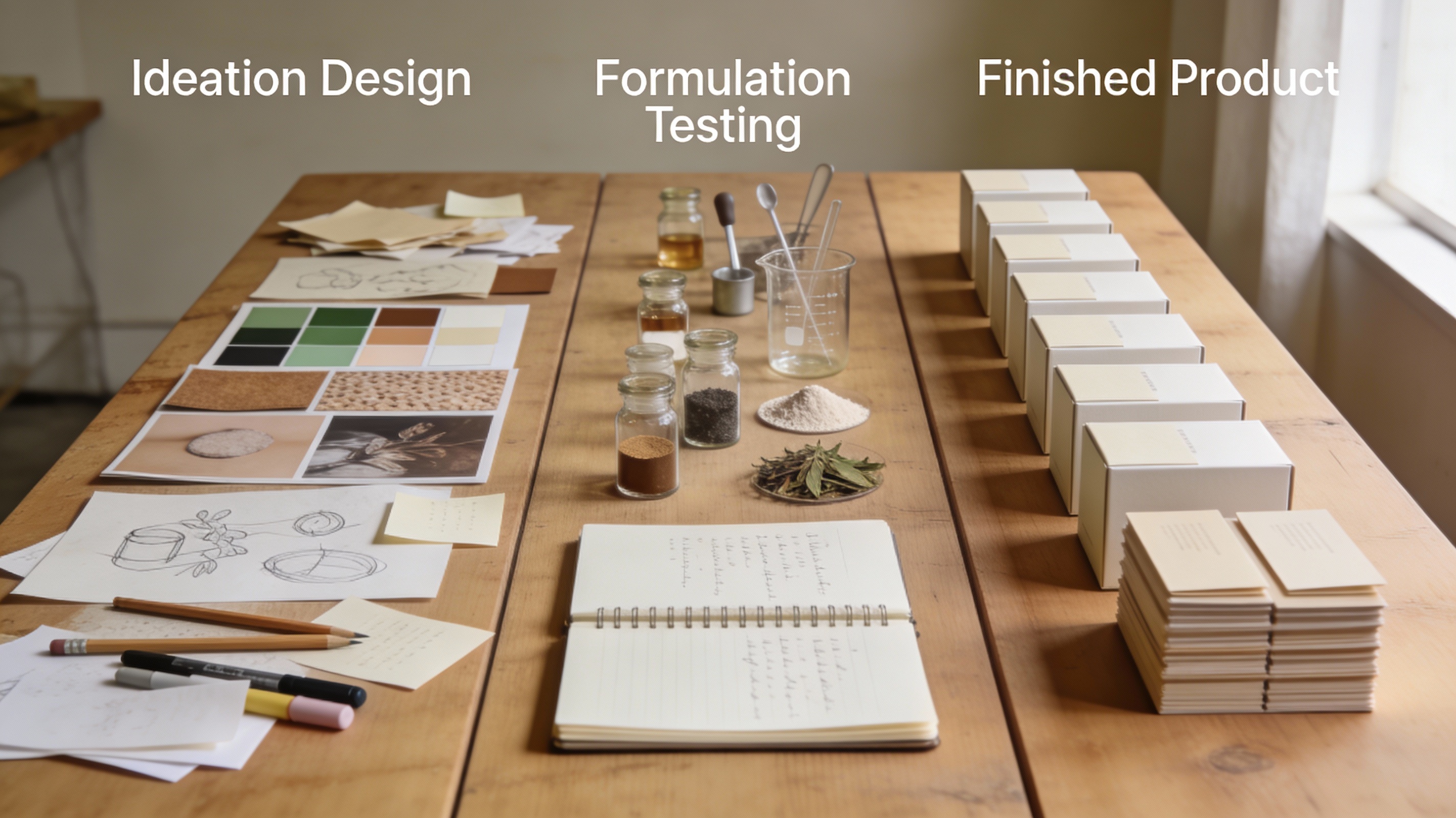
THE COMPLETE PRIVATE LABEL PRODUCT JOURNEY: 8 STAGES FROM IDEA TO INVENTORY
Understanding the Timeline
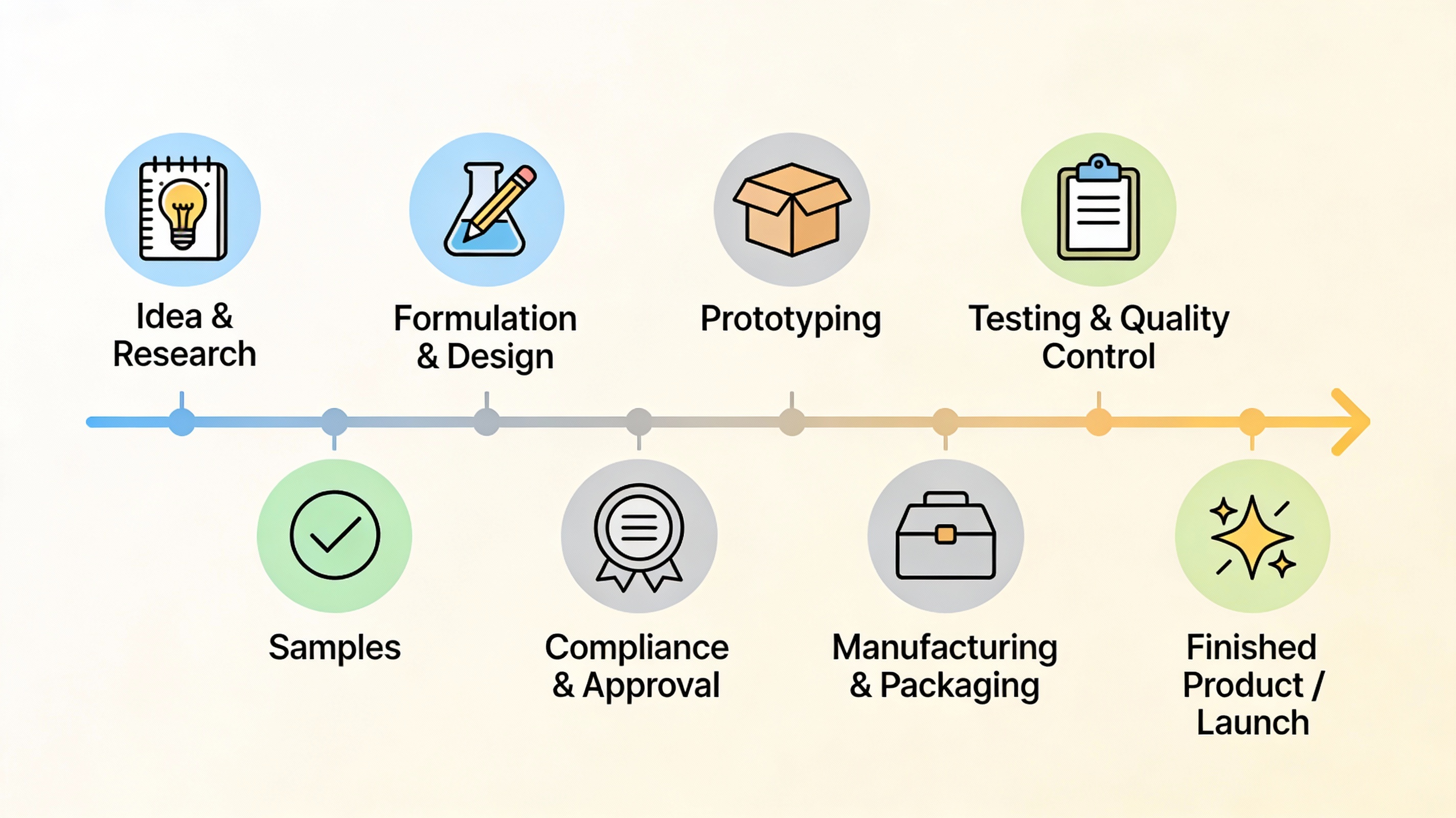
Total timeline for private label products: 8-12 weeks from first contact to delivery
Total timeline for custom formulations: 16-24 weeks
Let's break down exactly what happens at each stage.
STAGE 1: DISCOVERY & INQUIRY (Week 1)
What Happens:
You reach out to potential suppliers with your product concept. This is where you share your vision, target market, and business goals.
Your Action Items:
□ Research 3-5 potential suppliers
□ Prepare your project brief
□ Send initial inquiry emails
□ Schedule discovery calls
What to Include in Your Inquiry:
1. Your Brand Story
- Who you are
- Your target market
- Your brand positioning (accessible vs. premium)
- Your wellness philosophy
2. Product Requirements
- Product category (teas, incense, oils, etc.)
- Intended use/benefit
- Any must-have ingredients
- Format preferences
3. Business Details
- Target launch date
- Estimated order quantity
- Target retail price point
- Target market/country
4. Questions You Need Answered
- What formulations do you have in this category?
- What's your minimum order quantity?
- What's the typical timeline?
- What documentation do you provide?
Supplier Response Time: 24-48 hours for professional suppliers
Red Flag: No response within 72 hours or vague, unhelpful responses
STAGE 2: PRODUCT SELECTION & SAMPLES (Weeks 2-3)
What Happens:
Supplier presents available formulations. You review options, request samples, and evaluate which products align with your brand.
Your Action Items:
□ Review product portfolio/catalog
□ Request detailed specs for products of interest
□ Order physical samples (usually 2-5 products)
□ Test samples yourself and with target audience
□ Evaluate quality, aroma, texture, efficacy
What to Evaluate in Samples:
Quality Factors:
- Aroma/scent profile
- Texture and consistency
- Burn quality (for incense)
- Taste (for ingestibles)
- Packaging condition on arrival
Brand Fit:
- Does this align with your brand story?
- Will your customers love this?
- Does quality match your price point?
- Can you authentically stand behind this product?
Practical Considerations:
- Shelf life
- Storage requirements
- Seasonal considerations
- Shipping durability
Sample Costs: $50-$200 including shipping (often credited toward first order)
Timeline: 7-10 days for international sample delivery
STAGE 3: COMMERCIAL DISCUSSION (Week 3-4)
What Happens:
You've identified your product. Now you negotiate commercial terms, clarify expectations, and align on all business details.
Key Discussion Points:
Pricing Structure:
- Unit cost (FOB India)
- Shipping costs (by sea/air)
- Minimum order quantity
- Volume discounts (if applicable)
- Payment terms
Timeline Clarification:
- Production lead time
- Shipping transit time
- Total time from order to delivery
- Buffer for customs clearance
Customization Options:
- Can you adjust packaging size?
- Label customization included?
- Design support available?
- Any restrictions on branding?
Documentation Provided:
- Certificate of Analysis
- GMP Certificate
- Export documentation
- Ingredient declarations
- Heavy metal testing
- Microbial testing
Your Action Items:
□ Get written quotation with all costs
□ Clarify payment terms (deposit + balance)
□ Understand total landed cost
□ Confirm timeline end-to-end
□ Request documentation samples
□ Discuss any customization needs
Typical Payment Terms:
- 30-50% deposit to begin production
- 50-70% balance before shipment
- Letter of Credit for large orders
STAGE 4: PACKAGING & LABEL DESIGN (Weeks 4-6)
What Happens:
While production is being scheduled, you design packaging and labels that meet both brand standards and regulatory requirements.
Your Action Items:
Design Phase:
□ Create label design aligned with your brand
□ Include all required regulatory information
□ Get label reviewed by regulatory consultant (recommended)
□ Share final artwork with supplier for approval
□ Confirm label material and finishing options
Regulatory Compliance:
□ Include all required disclaimers for your market
□ List ingredients in proper format
□ Add net weight/volume declarations
□ Include manufacturer/distributor information
□ Add storage instructions and warnings
Information Needed from Supplier:
- Exact ingredient list (with botanical names)
- Net weight per unit
- Manufacturing location
- Batch coding system
- Shelf life information
What Your Label Must Include (US Example):
✓ Product name
✓ Net quantity
✓ Ingredient list (descending order by weight)
✓ Supplement Facts panel (if applicable)
✓ Distributor name and address
✓ Disclaimer: "These statements have not been evaluated by the FDA..."
✓ Storage instructions
✓ Batch number/lot code
✓ Best by date
Common Label Mistakes to Avoid:
× Making disease claims ("treats," "cures," "prevents")
× Missing required disclaimers
× Ingredient list in wrong format
× Inadequate font sizes
× Country of origin missing
Label Design Costs:
- DIY using Canva: $0-$50
- Freelance designer: $200-$800
- Agency design: $1,500-$5,000
Regulatory review: $500-$2,000 (highly recommended)
STAGE 5: ORDER CONFIRMATION & PRODUCTION (Weeks 6-8)
What Happens:
You finalize all details, pay deposit, and production begins. Your supplier manufactures your products to specification.
Your Action Items:
□ Review and sign commercial agreement/purchase order
□ Make deposit payment (30-50%)
□ Provide final label artwork
□ Confirm delivery address and shipping method
□ Set up communication schedule for updates
What Supplier Does:
- Sources fresh ingredients
- Manufactures product batch
- Conducts quality testing (CoA)
- Applies your labels/packaging
- Prepares export documentation
- Arranges shipping logistics
Production Timeline: 2-3 weeks for private label (existing formulation)
Quality Checkpoints During Production:
1. Raw material inspection
2. In-process quality checks
3. Finished product testing
4. Packaging quality control
5. Final Certificate of Analysis
Communication Expectations:
- Weekly updates on production status
- Immediate notification of any delays
- Photos of finished products before shipping
- Batch/lot number assignment
- Estimated shipping date
Red Flags:
× Long periods of no communication
× Vague answers about timeline
× Reluctance to share progress photos
× Sudden unexpected delays without explanation
STAGE 6: QUALITY VERIFICATION & SHIPPING PREP (Week 8-9)
What Happens:
Production is complete. Products undergo final testing, documentation is prepared, and shipping is arranged.
Your Action Items:
□ Review Certificate of Analysis
□ Approve product photos
□ Make balance payment (50-70%)
□ Confirm shipping address one final time
□ Arrange insurance (if not included)
□ Prepare for customs clearance in your country
Supplier Provides:
✓ Certificate of Analysis (test results)
✓ Product photos (packaged and ready)
✓ Batch/lot number information
✓ Commercial invoice
✓ Packing list
✓ Certificate of Origin
✓ GMP certificate copy
✓ Phytosanitary certificate (if required)
✓ Bill of Lading or Airway Bill
Document Review Checklist:
□ All product details match your order
□ Test results meet requirements (heavy metals, microbial)
□ Quantities are correct
□ Shipping address is accurate
□ Commercial value properly declared
□ HS codes included for customs
Shipping Options:
Sea Freight (4-6 weeks transit):
- Most cost-effective for large orders
- Best for: Orders over 500 units
- Cost: ~$500-$2,000 depending on volume
- Pros: Lowest per-unit cost
- Cons: Longest timeline
Air Freight (5-7 days transit):
- Faster but more expensive
- Best for: Urgent reorders, smaller quantities
- Cost: ~$5-$15 per kg
- Pros: Speed, reliability
- Cons: Higher cost
Express Courier (3-5 days):
- DHL, FedEx, etc.
- Best for: Small quantities, samples
- Cost: ~$10-$25 per kg
- Pros: Fast, door-to-door, tracking
- Cons: Expensive for large volumes
STAGE 7: SHIPPING & CUSTOMS CLEARANCE (Weeks 9-11)
What Happens:
Your products travel from India to your destination country, clear customs, and are delivered to your warehouse.
Timeline by Shipping Method:
- Sea freight: 4-6 weeks port-to-port
- Air freight: 5-7 days airport-to-airport
- Express courier: 3-5 days door-to-door
Your Action Items:
Before Arrival:
□ Receive all shipping documents from supplier
□ Engage customs broker (if using one)
□ Prepare for duty/tax payment
□ Ensure you have importer licenses (if required)
During Transit:
□ Track shipment progress
□ Stay in communication with supplier/freight forwarder
□ Prepare warehouse/storage for arrival
□ Review customs documentation
At Customs:
□ Submit required documentation
□ Pay applicable duties and taxes
□ Respond to any customs queries promptly
□ Arrange final delivery to your location
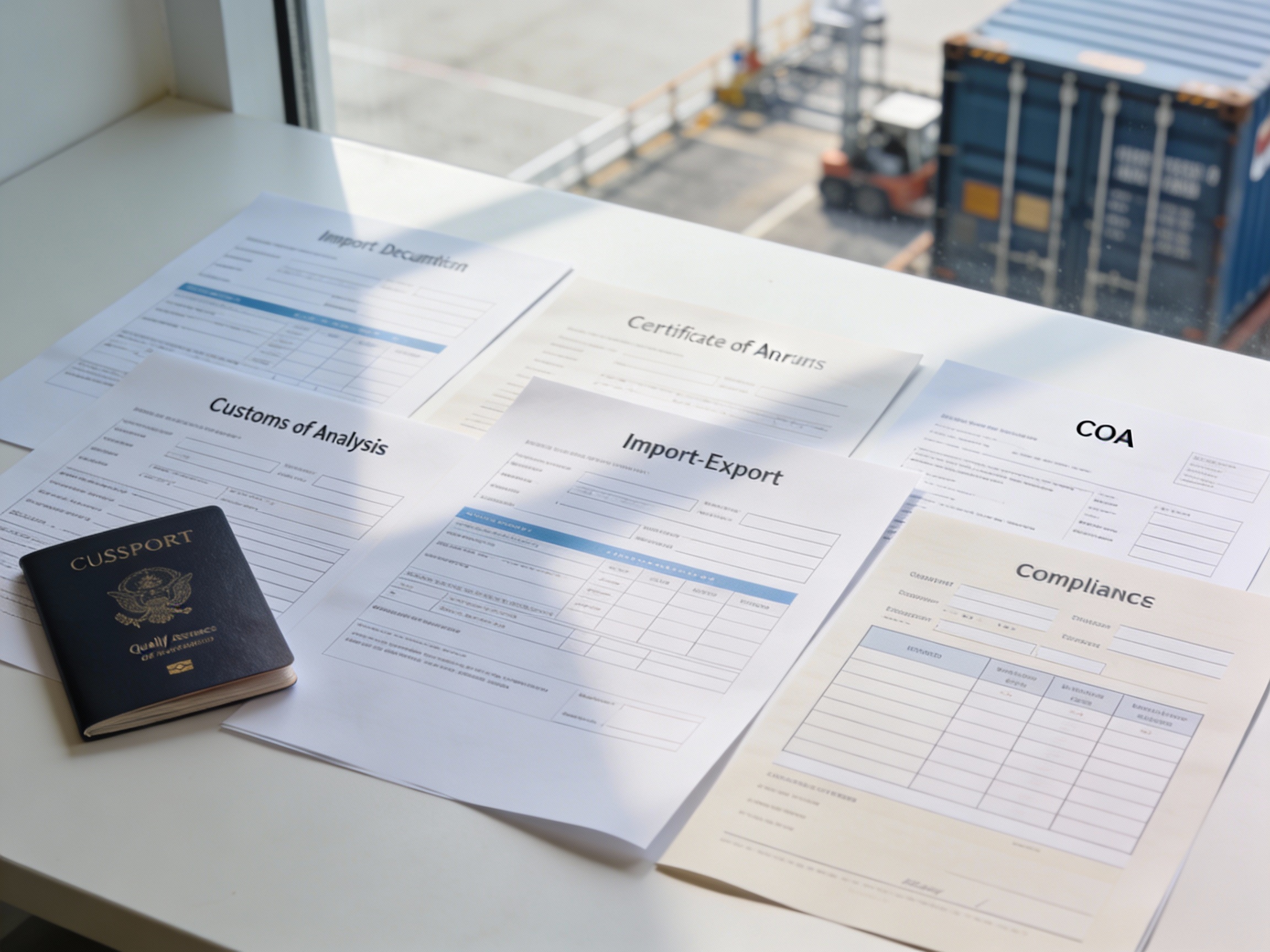
Customs Documentation Required:
✓ Commercial invoice
✓ Packing list
✓ Bill of Lading / Airway Bill
✓ Certificate of Origin
✓ Import permit (if required in your country)
✓ Product testing certificates
✓ GMP certification
Customs Duties & Taxes:
Varies by country and product classification
- US: Typically 0-6.5% for herbal products
- EU: Varies by member state, typically 2-12%
- UK: Similar to EU rates
- Always confirm HS code classification with customs broker
Customs Clearance Timeline:
- Straightforward shipments: 1-3 days
- First-time importer: 3-7 days (possible inspection)
- Complex products: Up to 2 weeks
Potential Delays:
× Incomplete documentation
× Random inspection selection
× Classification disputes
× Missing licenses or permits
× Holidays/weekends
STAGE 8: DELIVERY & LAUNCH (Week 11-12)
What Happens:
Products arrive at your location. You conduct final inspection, store inventory properly, and prepare for launch.
Your Action Items:
Upon Delivery:
□ Inspect shipment immediately
□ Verify quantity matches packing list
□ Check for any shipping damage
□ Confirm batch/lot numbers match documentation
□ Store products per recommended conditions
Quality Control Check:
□ Visual inspection of packaging
□ Spot-check label quality
□ Verify product appearance/aroma
□ Confirm labeling is correct
□ Check for any defects or issues
Document any issues immediately:
- Take photos
- Count discrepancies
- Note any damage
- Contact supplier within 48 hours
Post-Delivery:
□ Organize inventory management system
□ Update your records with batch/lot info
□ File all documentation (for regulatory compliance)
□ Plan marketing launch
□ Set up reorder timeline
Inventory Storage Best Practices:
- Cool, dry environment
- Away from direct sunlight
- Proper ventilation
- First-in, first-out system (FIFO)
- Track expiration dates
When to Reorder:
Start reorder process when you have 8-10 weeks of inventory remaining
(Allows for full 6-8 week lead time with buffer)
COST BREAKDOWN: WHAT TO EXPECT
Sample Private Label Order: 1,000 Units
Product Cost: $5,000
(1,000 units @ $5 per unit)
Shipping (Sea Freight): $800
(~16% of product cost)
Insurance: $100
(~2% of declared value)
Customs Duty: $400
(varies by country/product)
Customs Broker Fees: $300
(one-time processing)
Testing (if additional required): $500
(optional, for peace of mind)
Label Design: $500
(one-time investment)
Regulatory Consultation: $1,500
(one-time, highly recommended)
Total Investment: $9,100
Landed Cost Per Unit: $9.10
If selling at $25 retail: 64% gross margin
If selling at $35 retail: 74% gross margin
TIMELINE SUMMARY
Week 1: Discovery & inquiry
Week 2-3: Sample evaluation
Week 3-4: Commercial terms finalized
Week 4-6: Label design & regulatory review
Week 6-8: Production
Week 8-9: Quality verification & shipping prep
Week 9-11: Shipping & customs
Week 11-12: Delivery & launch prep
TOTAL: 11-12 weeks from first contact to inventory
TIPS FOR A SMOOTH JOURNEY
1. Start Early
Begin process 4-5 months before your desired launch date to allow buffer time
2. Over-Communicate
Set weekly check-in calls during production and shipping phases
3. Document Everything
Keep all emails, agreements, certificates in organized files
4. Build Relationships
Treat supplier as long-term partner, not transactional vendor
5. Plan for Delays
Add 2-3 weeks buffer to all timelines for first order
6. Test Before Scaling
Start with smaller MOQ to validate market demand
7. Invest in Compliance
Regulatory mistakes are expensive—get expert review
8. Prepare Your Market
Build pre-launch buzz so you're ready to sell upon arrival
COMMON QUESTIONS
Q: Can I speed up the timeline?
A: Air freight cuts 3-4 weeks but costs 3-5x more. Production time is fixed.
Q: What if I don't like the final product?
A: This is why sample evaluation is critical. Once production begins, you're committed.
Q: Can I make changes after ordering?
A: Minor changes (shipping address) yes. Formula or label changes typically no.
Q: What if my shipment is delayed?
A: Good suppliers communicate proactively. Build buffer time into your plans.
Q: Do I need a customs broker?
A: Not required but highly recommended for first-time importers. Worth the $200-500 fee.
THE BOTTOM LINE
Launching a private label wellness product is straightforward when you understand the process. The key is:
✓ Working with transparent, experienced suppliers
✓ Planning realistic timelines with buffers
✓ Investing in proper regulatory compliance
✓ Maintaining clear communication throughout
✓ Treating it as a partnership, not just a transaction
With the right supplier partner, your journey from concept to launch can be smooth, predictable, and exciting—setting the foundation for a successful wellness brand.
[Schedule Your Discovery Call] ← CTA