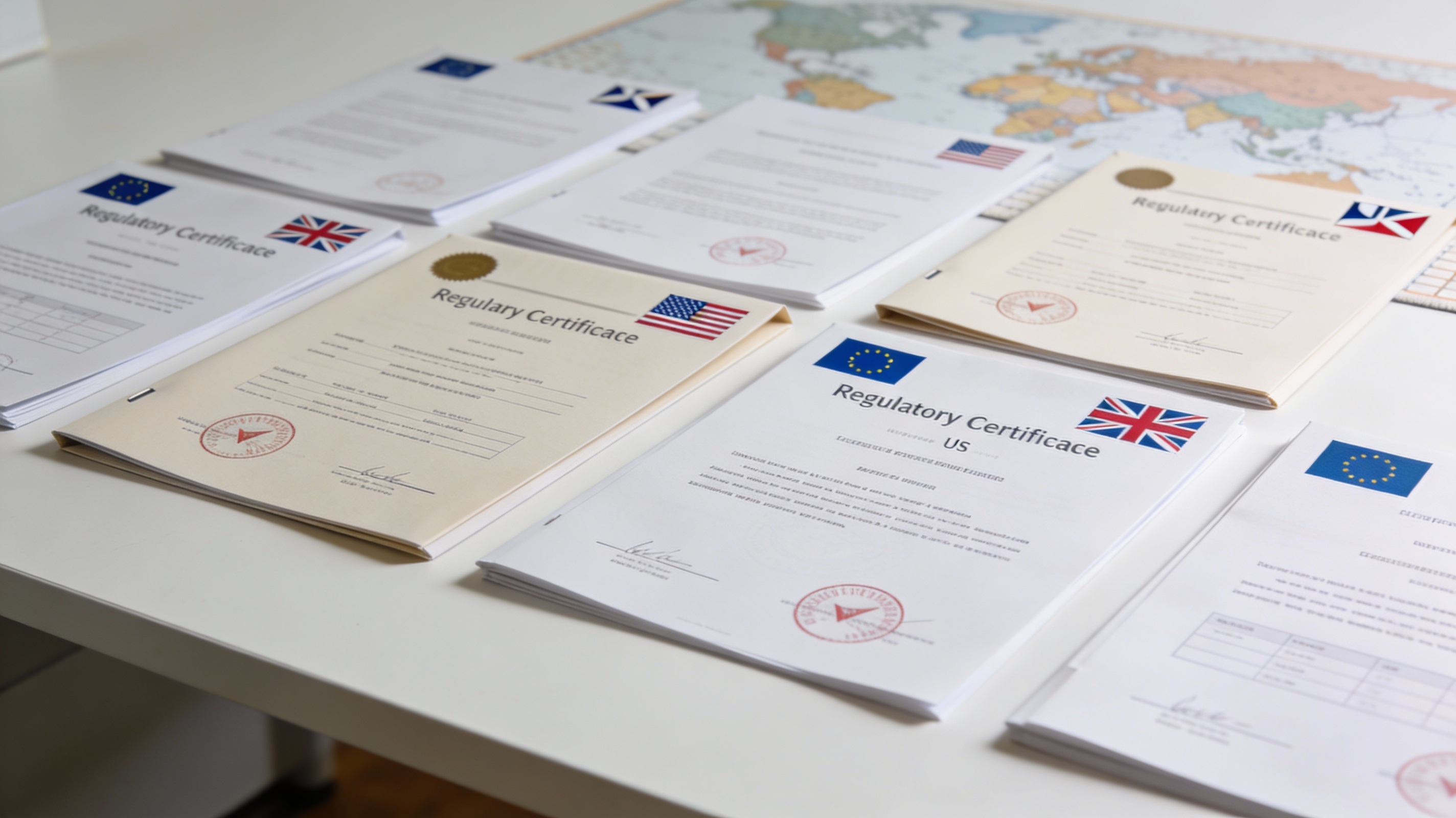
Why Regulatory Compliance Isn't Optional
Ignoring regulatory requirements doesn't just risk customs seizures—it exposes you to legal liability, financial penalties, and permanent damage to your brand reputation. Every market has specific rules about what Ayurvedic products can claim, which ingredients are permitted, and how they must be labeled.
The good news: with proper guidance, compliance is straightforward. The key is understanding which regulatory pathway applies to your specific product in each market.
Understanding Product Classification
Before diving into specific markets, understand that Ayurvedic products can fall into different categories:
Dietary Supplements / Food Supplements
- Fastest pathway to market
- Intended to supplement diet
- Limited health claims allowed
- Lower regulatory burden
Traditional Herbal Medicinal Products
- Higher regulatory bar
- Can make therapeutic claims
- Requires evidence of traditional use
- Longer approval timeline
Cosmetics (topical products)
- Different regulatory framework entirely
- Safety assessment required
- No internal health claims
- Specific labeling rules
Foods / Novel Foods
- For products consumed as food
- Some ingredients require novel food authorization
- No disease claims
- Must meet food safety standards
Your product category determines everything: approval timeline, permissible claims, labeling requirements, and import procedures.
UNITED STATES MARKET
Regulatory Body: FDA (Food and Drug Administration)
Most Common Pathway: Dietary Supplements
Classification:
Most Ayurvedic products enter the US market as dietary supplements under the Dietary Supplement Health and Education Act (DSHEA) of 1994.
Key Requirements:
1. Ingredient Compliance
- All ingredients must be GRAS (Generally Recognized as Safe) or have prior dietary supplement history
- New Dietary Ingredients (NDI) require pre-market notification 75 days before sale
- Prohibited ingredients list must be checked (e.g., ephedra banned)
2. Manufacturing Standards
- Must follow Current Good Manufacturing Practice (cGMP) for dietary supplements (21 CFR Part 111)
- Facility registration with FDA required
- Biennial registration renewal
3. Labeling Requirements
- Supplement Facts panel (not Nutrition Facts)
- Ingredient list in descending order by weight
- Required disclaimer: "This statement has not been evaluated by the FDA. This product is not intended to diagnose, treat, cure, or prevent any disease."
- Net quantity declaration
- Manufacturer/distributor information
4. Claims Permitted
✓ Structure/Function Claims: "Supports immune health," "Promotes relaxation"
✓ Nutrient Content Claims: "High in antioxidants"
✗ Disease Claims: Cannot claim to treat, cure, or prevent disease
✗ Drug Claims: Cannot say "reduces cholesterol" without drug approval
5. Import Requirements
- Prior Notice of Imported Food (submit before arrival)
- FDA may inspect shipments at port
- Proper labeling required before entry
- Country of origin declaration
Timeline:
- No pre-market approval required (unless NDI)
- Can begin selling immediately if compliant
- First shipment can clear customs in 3-7 days with proper documentation
Cost Implications:
- FDA facility registration: ~$5,000 (every 2 years)
- cGMP compliance audit: $3,000-$8,000
- Label review attorney: $1,500-$3,000
- Testing per batch: $500-$1,500
Common Pitfalls:
🚫 Making disease claims ("treats anxiety," "cures arthritis")
🚫 Using prohibited ingredients unknowingly
🚫 Inadequate substantiation for structure/function claims
🚫 Mislabeling or incomplete Supplement Facts panel
🚫 Failing to register facility before first import
Resources:
- FDA Dietary Supplement Labeling Guide: fda.gov/food/dietary-supplements
- NDI Notification Guidance: fda.gov/ndi
EUROPEAN UNION MARKET
Regulatory Bodies: National Competent Authorities + EMA (European Medicines Agency)
Two Main Pathways:
PATHWAY 1: Food Supplements (Faster, More Common)
Regulatory Framework:
Food Supplements Directive 2002/46/EC
Key Requirements:
1. Ingredient Compliance
- Ingredients must be on EU positive lists or have history of safe use
- Novel Food Regulation applies to ingredients without pre-1997 use in EU
- Maximum levels for vitamins/minerals where established
- Country-specific restrictions exist (check target country)
2. Novel Food Assessment (If Applicable)
- Required if ingredient not consumed in EU before May 1997
- Costly and time-consuming (€250,000+, 18-24 months)
- Many Ayurvedic herbs trigger this requirement
- Work-around: Demonstrate use pre-1997 in EU member state
3. Labeling Requirements
- Ingredient list with quantities
- "Food supplement" designation required
- Daily recommended dose
- Warning not to exceed stated dose
- Statement that supplements don't replace varied diet
- Storage instructions
- Keep out of reach of children
4. Claims Permitted
- Only pre-approved health claims from EU Register of Nutrition and Health Claims
- Must have scientific substantiation
- No disease reduction claims
- Extremely restrictive compared to US
5. Notification
- Notify national authority in first country of sale
- May require notification in each member state
- No pre-market authorization (unless novel food)
Timeline:
- 2-4 weeks for compliant products (no novel food issues)
- 18-24 months if novel food authorization needed
Cost:
- Label compliance review: €2,000-€5,000
- Novel food dossier (if needed): €100,000-€300,000
- National notifications: €500-€2,000 per country
- Testing: €1,000-€3,000 per batch
PATHWAY 2: Traditional Herbal Medicinal Products (THR)
When Required:
If making medicinal claims (therapeutic, diagnostic, preventive)
Key Requirements:
1. Evidence of Traditional Use
- At least 30 years of medicinal use worldwide
- Including at least 15 years within EU
- Bibliographic evidence required
- Expert reports on safety and traditional use
2. Application Process
- Submit to national competent authority
- Quality, safety, and traditional use documentation
- Pharmaceutical quality standards required
- Assessment takes 12-18 months
3. Ongoing Obligations
- Pharmacovigilance requirements
- Qualified Person responsible for quality
- Annual reporting
- GMP compliance mandatory
Cost:
- Initial THR application: €30,000-€60,000
- Ongoing compliance: €10,000+ annually
- Manufacturing must be pharmaceutical-grade
Timeline:
- 12-24 months from application to approval
Most Ayurvedic products avoid THR route due to cost/complexity and enter as food supplements instead.
Common EU Pitfalls:
🚫 Assuming US compliance means EU compliance (it doesn't)
🚫 Making any health claims not on EU approved list
🚫 Using novel food ingredients without authorization
🚫 Not checking country-specific restrictions (vary by member state)
🚫 Inadequate traceability documentation
Resources:
- EU Register of Health Claims: ec.europa.eu/food/safety/labelling-and-nutrition
- Novel Food Catalogue: ec.europa.eu/food/novel-food
UNITED KINGDOM MARKET (POST-BREXIT)
Regulatory Body: MHRA (Medicines and Healthcare products Regulatory Agency) + FSA (Food Standards Agency)
Current Status (2025):
UK has largely maintained EU framework with some divergences
Two Main Pathways:
PATHWAY 1: Food Supplements
Key Changes from EU:
- Separate GB (Great Britain) registration required
- Northern Ireland still follows EU rules
- GB Nutrition and Health Claims Register (similar to EU)
- Novel food authorizations require separate UK assessment
Requirements:
- Notify FSA or local authority before first sale in GB
- Meet food supplement regulations
- Labeling in English
- UK business address as importer/distributor
Timeline:
- 2-4 weeks for straightforward products
- Novel food authorization: 12-18 months (if required)
Cost:
- Similar to EU pathway
- Additional cost for separate UK novel food dossier (if needed)
PATHWAY 2: Traditional Herbal Registration (THR)
Regulatory Body: MHRA
Key Changes:
- Separate THR application for GB
- Grandfathering arrangements for existing EU THRs expired
- Must reapply specifically for UK market
Requirements:
- Similar to EU THR requirements
- Evidence of traditional use
- Quality and safety documentation
- MHRA assessment
Timeline:
- 12-18 months for new applications
Cost:
- £6,000-£12,000 application fees
- Additional documentation costs: £20,000-£40,000
UK-Specific Considerations:
✓ Post-Brexit, GB and NI have different rules (NI follows EU)
✓ Existing EU approvals don't automatically apply in GB
✓ Must have UK Responsible Person for products
✓ Separate labeling for GB vs NI if serving both markets
Resources:
- MHRA guidance: gov.uk/government/organisations/medicines-and-healthcare-products-regulatory-agency
- FSA food supplements: food.gov.uk
COMPARATIVE OVERVIEW
AspectUnited StatesEuropean UnionUnited KingdomEasiest pathwayDietary SupplementFood SupplementFood SupplementPre-market approvalNo (unless NDI)No (unless novel food)No (unless novel food)Timeline to marketImmediate if compliant2-4 weeks notification2-4 weeks notificationHealth claimsStructure/function allowedOnly pre-approved claimsOnly pre-approved claimsLabelingSupplement Facts panelIngredient list formatEnglish labeling requiredManufacturingcGMP requiredGMP for foodGMP for foodOngoing obligationsFacility re-registrationMinimalMinimalNovel ingredientNDI notificationNovel food authorizationSeparate UK authorization
STRATEGIC RECOMMENDATIONS BY MARKET
If Entering US First:
✓ Fastest path to revenue
✓ More flexible claim environment
✓ Larger market size
✓ Use success to fund EU/UK entry later
If Entering EU First:
✓ Gateway to 27 countries
✓ Once compliant, can sell across EU
✓ Higher initial compliance cost but broader reach
✓ Consider starting in specific member states with simpler requirements
If Entering UK First:
✓ English-speaking market (easier communication)
✓ Similar to EU framework but separate
✓ Smaller market than US or EU
✓ Good testing ground before larger markets
UNIVERSAL COMPLIANCE BEST PRACTICES
Regardless of market:
1. Start with Regulatory Consultation
Hire lawyer/consultant specializing in your target market before finalizing formulation or labels
2. Document Everything
Maintain complete records: ingredient sources, testing, manufacturing, batch records
3. Conservative Claims
When in doubt, make no claim. Violating claim rules is the #1 cause of regulatory problems
4. Test Before Import
Conduct all required testing before shipping to avoid customs holds or rejections
5. Work with Experienced Suppliers
Suppliers familiar with your target market can help navigate requirements proactively
6. Budget for Compliance
Regulatory costs are real and should be factored into business planning:
- US: $10,000-$20,000 initial setup
- EU: $15,000-$30,000 (higher if novel food)
- UK: $12,000-$25,000
7. Stay Updated
Regulations change. Subscribe to updates from regulatory bodies in your markets.
COMMON QUESTIONS ANSWERED
Q: Can I use the same label for US, EU, and UK?
A: No. Each market has specific labeling requirements. You'll need separate labels.
Q: If approved in US, is EU easier?
A: No. They're separate systems. US approval doesn't streamline EU process.
Q: Can I make Ayurvedic-specific claims like "balances doshas"?
A: In US, possibly as structure/function claim with proper substantiation. In EU/UK, very unlikely unless traditional use is documented and claim is pre-approved.
Q: What if my ingredient isn't on approved lists?
A: You may need novel food authorization (EU/UK) or NDI notification (US). This adds significant time and cost.
Q: Do I need separate testing for each market?
A: Testing from ISO 17025 accredited labs is generally accepted across markets, but specific parameters may differ.
WHEN TO HIRE PROFESSIONAL HELP
DIY is risky if:
- You're making any health/therapeutic claims
- Your product contains ingredients not commonly used in target market
- You're uncertain about classification
- Your budget is significant enough that mistakes would be costly
Hire regulatory consultant if:
- First time entering market
- Product is complex or multi-ingredient
- You want to make health claims
- You have budget >$50,000 at risk
Cost of consultant:
- US: $3,000-$8,000 for straightforward products
- EU: $5,000-$15,000 for food supplement pathway
- UK: $4,000-$10,000
This is cheap insurance against $50,000+ in seized inventory or reformulation costs.
THE BOTTOM LINE
Regulatory compliance isn't glamorous, but it's what separates sustainable wellness brands from those that flame out after their first customs seizure or regulatory warning letter.
The markets are different:
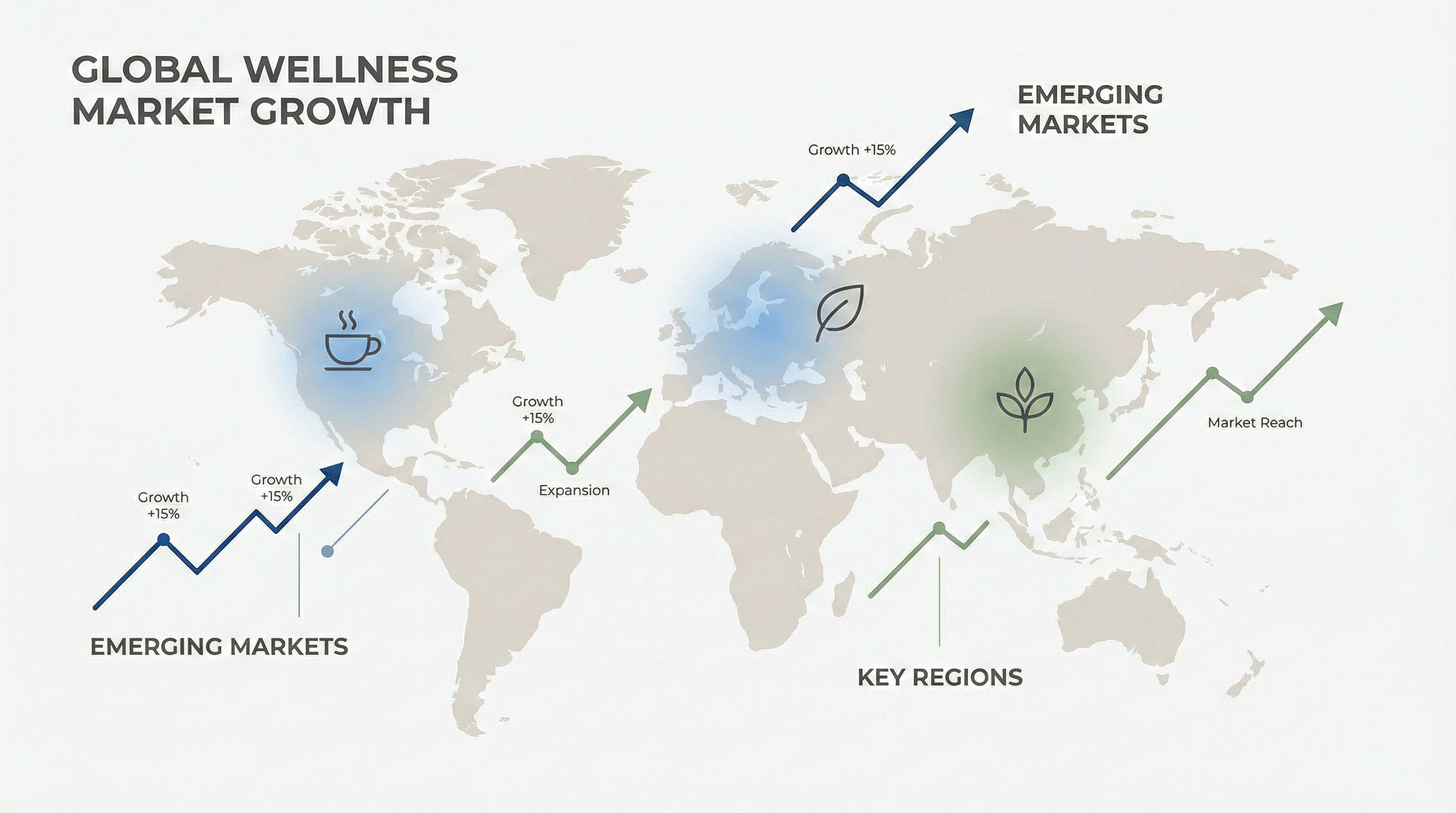
- US offers fastest entry and most flexibility
- EU offers largest collective market but stricter rules
- UK is middle ground with English-language advantage
The smart approach:
- Start with one market, master compliance there
- Use that revenue to fund expansion
- Work with suppliers who understand regulatory requirements
- When in doubt, consult experts before manufacturing
The investment in proper regulatory compliance pays dividends in the form of:
✓ Smooth customs clearance
✓ No costly reformulations
✓ No regulatory warning letters
✓ Customer trust in your brand
✓ Ability to scale without legal issues
Your wellness brand deserves to launch properly—compliant, confident, and built to last.